
The average patient with a rare disease spends between five to seven years bouncing through the healthcare infrastructure before receiving an accurate diagnosis. This prolonged period frequently termed the “diagnostic odyssey” results in irreversible disease progression, fragmented clinical care, and staggering economic costs for healthcare systems and payers alike.
By utilizing advanced machine learning for rare disease diagnosis, healthcare organizations can transition from a reactive model of care to proactive, early patient risk stratification.
Advanced predictive modeling in healthcare allows data teams to surface subtle, longitudinal phenotypic signatures hidden deep within electronic health records (EHR) and insurance claims data. This framework uncovers at-risk individuals months or even years before a formal diagnosis is initiated by a specialist.
The Core Obstacle: Data Scarcity and Extreme Class Imbalance
Building an administrative or clinical machine learning model for a prevalent condition like type 2 diabetes or hypertension is straightforward: data sets contain millions of positive training instances. In contrast, by definition, a rare disease affects fewer than 200,000 individuals across the United States, or fewer than 5 in 10,000 in the European Union.
When training a predictive model for a rare condition, data scientists face extreme class imbalance. If a specific condition only occurs in 1 out of 50,000 patient records within a health system database, a standard machine learning algorithm can achieve 99.99% accuracy simply by predicting that nobody has the disease. The accuracy paradox is the name given to this.
To bypass this hurdle, sophisticated risk stratification pipelines rely on precise algorithmic selection and specialized feature engineering to surface meaningful signal from noisy, sparse data matrices.
Algorithmic Frameworks for Early Phenotype Identification
Accelerating the early detection of rare diseases requires moving past basic boolean search strings (e.g., searching strictly for a single ICD-10 code) toward multi-layered machine learning architectures.
1. Supervised Learning and Regularization Techniques
When a small gold-standard cohort of confirmed clinical cases is available, supervised machine learning models train on known patient journeys to establish predictive patterns.
- LASSO (Least Absolute Shrinkage and Selection Operator) Regression: This technique applies a L1 regularization penalty to drive irrelevant features to zero. It is highly effective when analyzing thousands of medical billing codes across claims databases, leaving only the most predictive combinations of procedures and symptoms.
- Gradient Boosted Trees (XGBoost / LightGBM): These ensemble methods are excellent at capturing non-linear interactions between disparate symptoms over time—such as a specific dermatological presentation occurring three months before a sudden gastrointestinal admission.
2. Unsupervised Learning for Anomaly Detection
When labeled training data is scarce or non-existent, unsupervised learning clusters unlabeled patient data to identify outliers who deviate significantly from healthy control cohorts.
- Principal Component Analysis (PCA) & t-SNE: Complex genetic or biochemical panels can be made less dimensional.
- K-Means and Hierarchical Clustering: Groups patients with similar cryptic, multi-systemic symptoms, isolating cohorts that display patterns highly indicative of an undiagnosed underlying syndrome.
Data Intake and Pipeline Design: From EHR to Claims Information
The success of any predictive model in healthcare relies entirely on data quality and integration capabilities. Medical data is siloed, complex, and notoriously messy.
| Data Source | Strengths for Rare Disease Modeling | Technical Deficiencies |
| Electronic Health Records (EHR) | Contains deep clinical nuances, lab values, and qualitative physician notes. | Unstructured text, missing fields, and lack of cross-institutional tracking. |
| Medical Claims Data (ICD-10 / CPT) | Highly structured, covers long-term patient journeys across multiple clinics. | Designed for billing, lacks clinical severity metrics, subject to upcoding bias. |
To extract maximum predictive power, deep data engineering platforms must unify these modalities. This is where modern AI platforms provide extreme clinical lift.
For instance, The DDI Grouper and Risk technology developed by Deep Data Insight is built specifically to address this pain point. By processing thousands of distinct, historical medical billing codes and unstructured data points concurrently, it bypasses traditional system silos. It converts fragmented claims data into a cohesive time-series matrix, making it possible for machine learning algorithms to spot faint diagnostic signatures across complex patient populations.
Overcoming Text Blindness via Natural Language Processing (NLP)
Over 80% of actionable medical data resides within unstructured physician narratives, progress notes, and discharge summaries. Advanced models integrate Natural Language Processing pipelines to convert these texts into structured features.
Through named entity recognition (NER), NLP models capture clinical signs that lack dedicated ICD-10 billing codes—such as “episodic muscle twitching” or “atypical childhood blistering” and map them directly to the Human Phenotype Ontology (HPO).
Clinical Validation & Overcoming the Low PPV Trap
Evaluating a model’s clinical viability in rare disease identification requires looking past generic accuracy scores. Because the background prevalence of these conditions is incredibly low, standard models yield an unsustainably low Positive Predictive Value (PPV), resulting in high false-positive rates that can easily trigger alarm fatigue among practicing clinicians.
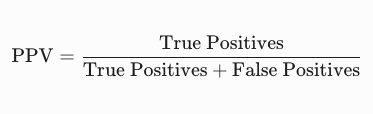
If a rare disease model has a sensitivity of 90% and a specificity of 99%, but the disease prevalence is only 0.01%, the PPV will hover around 1%. This means 99 out of 100 flagged patients are false alarms.
Adjusting the Threshold and Measuring Lift
To make these algorithms viable for Clinical Decision Support Systems (CDSS), data science teams optimize for Lift—the factor by which the model improves detection over random chance.
[Random Sampling Precision: 0.015%] ───► [ML Predictive Model Precision: 6.0%] = 400x Performance LiftBy adjusting the mathematical classification threshold, developers can fine-tune the balance between sensitivity and PPV depending on the exact target deployment goal:
- Epidemiological Sizing & Clinical Trial Recruitment: In order to maximise sensitivity (collecting as many potential true positives as possible to assess overall market or trial viability), set a lower threshold.
- High-Cost Clinical Interventions: Set a higher threshold (e.g., 75% probability match) to optimize PPV, ensuring that direct, invasive diagnostic validations or expensive orphan drug therapies are directed only to patients with an incredibly high likelihood of true positive status.
Real-World Case Study: Machine Learning for Rare Dermatological Conditions
The practical execution of these predictive theories is demonstrated in peer-reviewed clinical data engineering. Deep Data Insight designed and published a dedicated framework: the Predictive Algorithm for Early Detection of Epidermolysis Bullosa Dystrophica (EBD).
Epidermolysis Bullosa Dystrophica is a rare genetic connective tissue disorder characterized by severe skin fragility and blister formation. Because its initial presentation can easily mimic common infant dermatological conditions, formal diagnosis is frequently delayed, causing preventable skin damage and systemic complications.
By utilizing advanced pattern recognition and machine learning architecture tailored specifically for sparse data sets, Deep Data Insight’s predictive model analyzes early, seemingly minor clinical presentations and demographic markers. The algorithm isolates the distinct phenotypic trajectory of EBD from standard neonatal rashes, allowing clinical care teams to implement specialized protective skin management plans and coordinate early genetic testing long before severe, irreversible structural skin damage occurs.
Strategic Suggestions for Executives in Healthcare and Life Science
If your organization is looking to deploy machine learning pipelines to optimize rare disease management, adopt this execution framework:
- Prioritize Feature Engineering Over Algorithmic Complexity: Spend more time mapping clinical symptoms to the Human Phenotype Ontology (HPO) and structuring timeline sequences than trying to build overly complex neural networks on small data sets.
- Deploy Intelligent Data Extraction Pipelines: Implement robust AI platforms like The DDI Grouper to ingest, clean, and harmonize disparate data streams (EHR notes, billing claims, and lab registries) before running predictive workflows.
- Address the Human-in-the-Loop Validation Layer: Ensure your implementation framework includes a step-by-step communication protocol that respects the patient-clinician relationship. Models should gently flag risk inside Clinical Decision Support Systems rather than making automated diagnostic conclusions.
- Evaluate for Lift, Not Raw Accuracy: Track how many times more effective your model is at surfacing patients compared to random population screening.
Conclusion
Transitioning the management of rare diseases from late-stage reaction to early algorithmic identification is no longer a distant theoretical goal. By employing specialized machine learning workflows designed to handle data scarcity, extreme class imbalances, and fragmented records, healthcare institutions can systematically close the gap on the diagnostic odyssey.
Optimize Your Clinical Risk Forecasting Infrastructure
Building predictive models capable of parsing multi-systemic data requires world-class AI and data science infrastructure. Deep Data Insight specializes in engineering custom machine learning platforms, pattern recognition frameworks, and intelligent grouping technologies tailored specifically to complex healthcare datasets.
Contact the Deep Data Insight Team Today to consult with our data scientists, explore our advanced clinical case studies, and discover how our proprietary AI architectures can optimize your patient risk forecasting programs.
FAQs
How does machine learning help in diagnosing rare diseases when there is very little patient data available?
Machine learning models handle sparse datasets through specific techniques such as regularized models (like LASSO regression), anomaly detection workflows, and data augmentation. Instead of relying solely on exact direct case matches, the algorithms evaluate structural anomalies or complex, multi-system symptom trajectories over time that deviate sharply from the general baseline population.
What is the biggest technical challenge when modeling rare diseases in healthcare?
The primary challenge is extreme class imbalance. Because rare diseases affect a minuscule fraction of the overall population, standard algorithms can experience a high false-positive rate (low Positive Predictive Value). This requires data science teams to optimize models for “Lift” and employ precision feature engineering rather than relying on raw accuracy scores.
Can claims data alone be used for machine learning rare disease diagnosis?
Yes, longitudinal claims databases contain rich transactional histories of diagnoses, procedures, and treatments across years. By utilizing advanced grouping engines like The DDI Grouper, data engineers can map these multi-code sequences over time into clear phenotypic patterns capable of predicting a condition before it is explicitly documented.
What role does Natural Language Processing (NLP) play in patient risk stratification?
NLP is essential because roughly 80% of clinical data is locked away inside unstructured medical narratives. NLP models parse through physician notes, discharge summaries, and radiology reports to extract hidden clinical markers that do not possess explicit ICD billing codes, mapping them into structured data formats for predictive modeling.
How do clinicians interact with these predictive models without experiencing alert fatigue?
Models should be integrated directly into Clinical Decision Support Systems (CDSS) with strict probability threshold rules. By adjusting classification thresholds to prioritize high Positive Predictive Value (PPV), the system ensures it only triggers clinical flags when a patient exhibits an exceptionally high statistical probability profile, keeping false alarms to a minimum.